History of Korean Kimchi: Why This Dish Is So Central
"The preservation of flavor through fermentation has defined culinary traditions for centuries, turning simple vegetables into a cultural cornerstone."
The history of Korean kimchi is a journey of preservation techniques that evolved from basic salted vegetables into a globally recognized culinary icon. This guide explores its cultural roots, nutritional profile, and the complexities of international naming standards.
You will learn about its fermentation process, historical consumption patterns, and the distinction between traditional methods and modern variations.
How did the history of Korean kimchi begin?
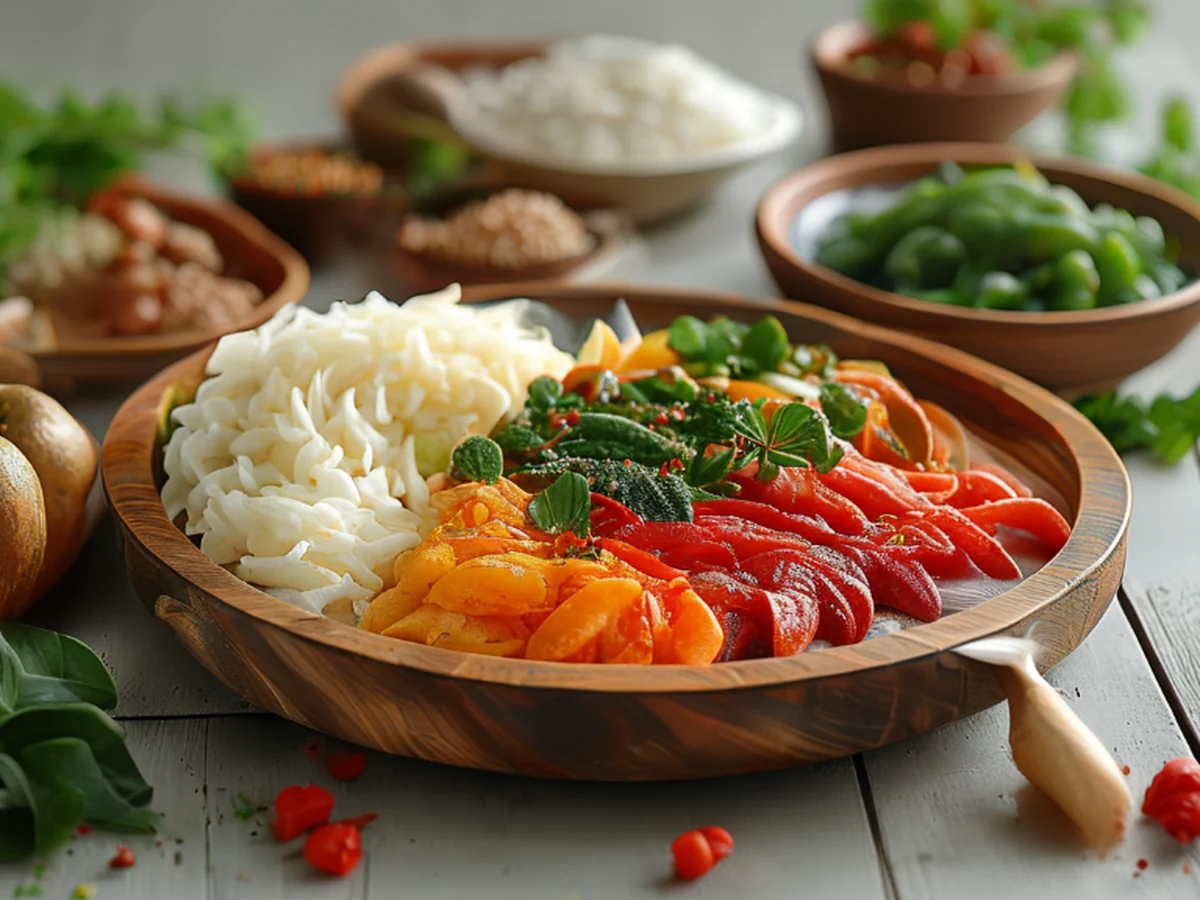
As I walk through the dim, ancient kitchen, the heavy scent of brine makes me feel the weight of lost history.
Walking through a quiet, traditional kitchen, one might imagine ancestors packing seasonal vegetables into heavy earthenware jars to ensure survival through winter. This process of brining and fermenting has deep roots in communal survival and seasonal availability.
The history of Korean kimchi reflects a long-standing tradition of pickling vegetables to preserve them for longer periods. While specific early recipes are lost to time, the foundational method of salting vegetables remains a constant.
This level of consumption highlights how central the dish became to the daily diet.
The evolution of the dish moved from simple salt-cured vegetables to more complex recipes involving spices and seasonings. This transition reflects changes in agricultural availability and trade over many centuries.
I find that the second point in this timeline is the most significant.
What is the kimchi making process?
A hand reaches for a large ceramic jar, carefully pressing down on layers of seasoned cabbage to remove air pockets. This tactile interaction is essential for successful fermentation in traditional settings.
The kimchi making process typically follows a specific sequence of preparation and aging. To replicate traditional results, one can follow these steps:
- Prepare the vegetables by soaking them in brine to achieve the necessary salt concentration and texture. 2. Mix the brined vegetables with seasonings, which may include various spices and aromatics. *) Pack the seasoned vegetables into airtight jars, ensuring they are tightly compressed to minimize oxygen exposure. 4. Leave the jars to ferment at room temperature for 24 to 48 hours before moving them to cooler storage.
I remember watching the bubbling surface of a freshly packed jar, a sign that the fermentation was actively beginning. This natural chemical change is what develops the signature tangy flavor.
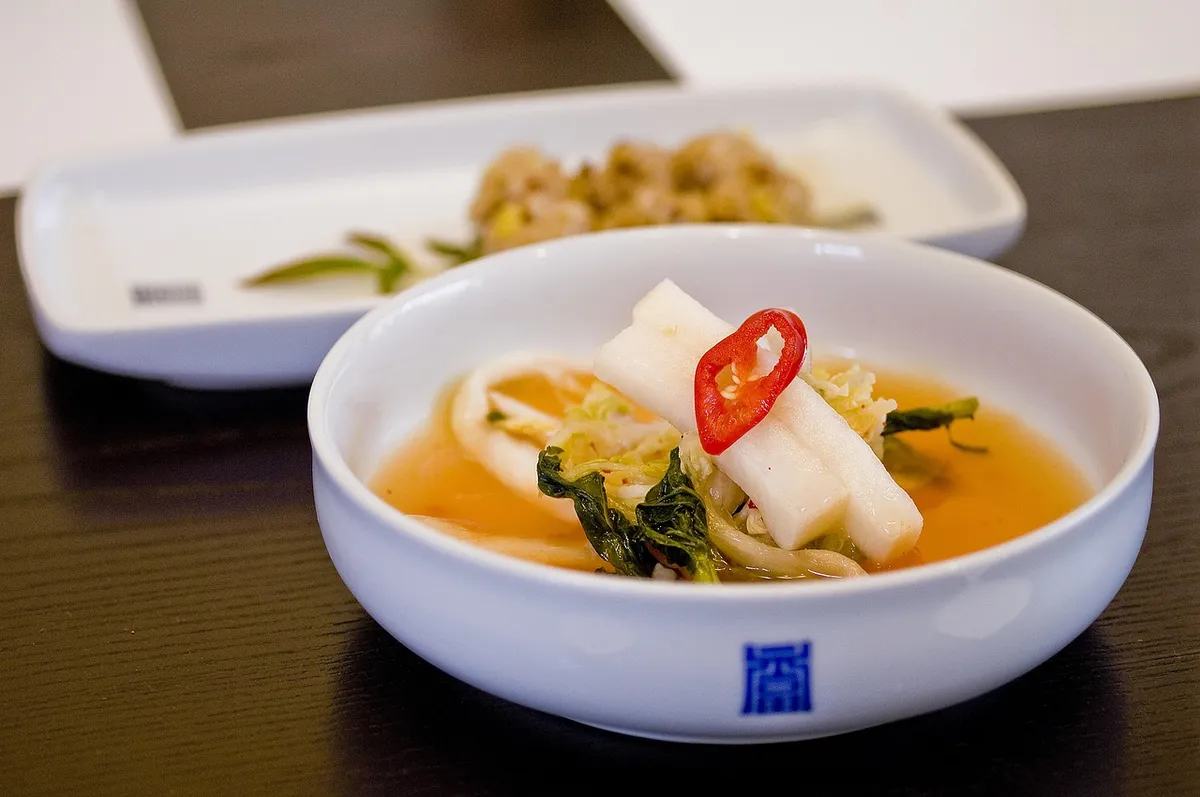
- Prepare the vegetables by salting them to draw out moisture.
- Mix the seasoned paste with the prepared vegetables.
- Pack the mixture into jars for fermentation.
What are the nutritional facts for cabbage kimchi?
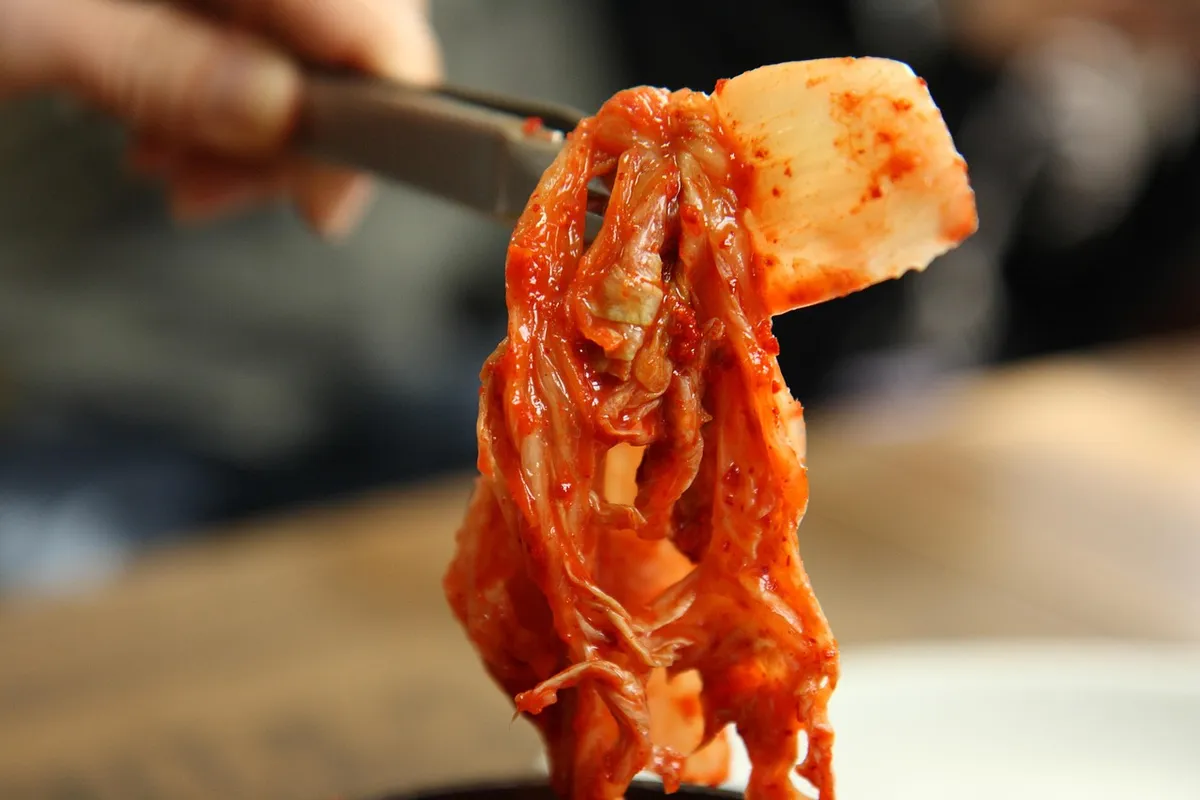
A person sits at a wooden table, lifting a small portion of vibrant red cabbage to their mouth. The texture is crisp, providing a sharp contrast to the soft rice served alongside it.
Understanding the nutritional profile of the dish is helpful for those integrating it into a modern diet.
| Nutrient | Amount per 100g |
|---|---|
| Calories | 15 kcal |
| Protein | 1.1g |
| Carbohydrates | 2.4g |
| Fiber | 1.6g |
The nutrient density of cabbage kimchi varies depending on the specific ingredients used in the recipe. For instance, the iron content is 2.5mg per 100g, while potassium is 151mg. These values provide a baseline for understanding the energy and mineral content of the vegetable-based dish.
How do modern kimchi variations compare to tradition?
A chef in a modern kitchen experiments with different types of peppers and seafood to create a unique flavor profile. This reflects the constant innovation within the culinary world.
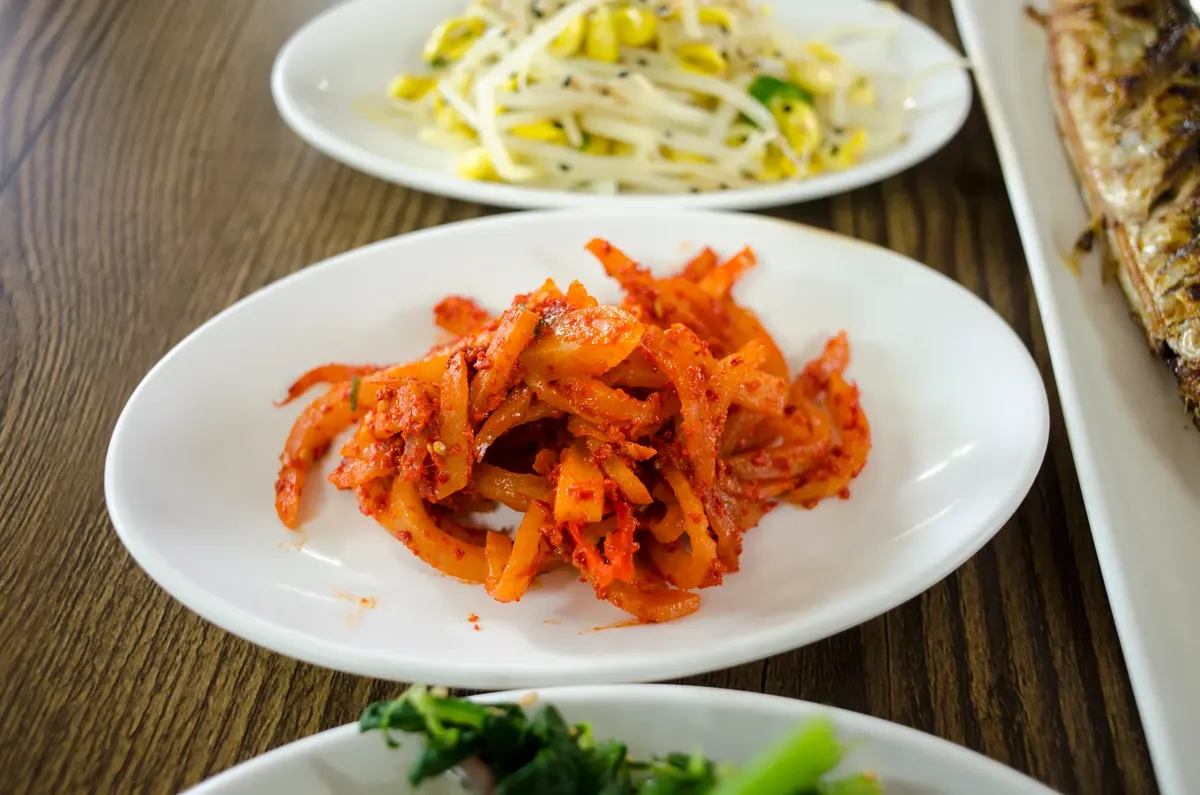
Modern kimchi variations often deviate from historical recipes to suit contemporary tastes and global availability. While traditional methods rely on specific seasonal vegetables, modern versions might use different greens or even non-traditional ingredients.
This reflects the dynamic nature of food culture as it adapts to new environments.
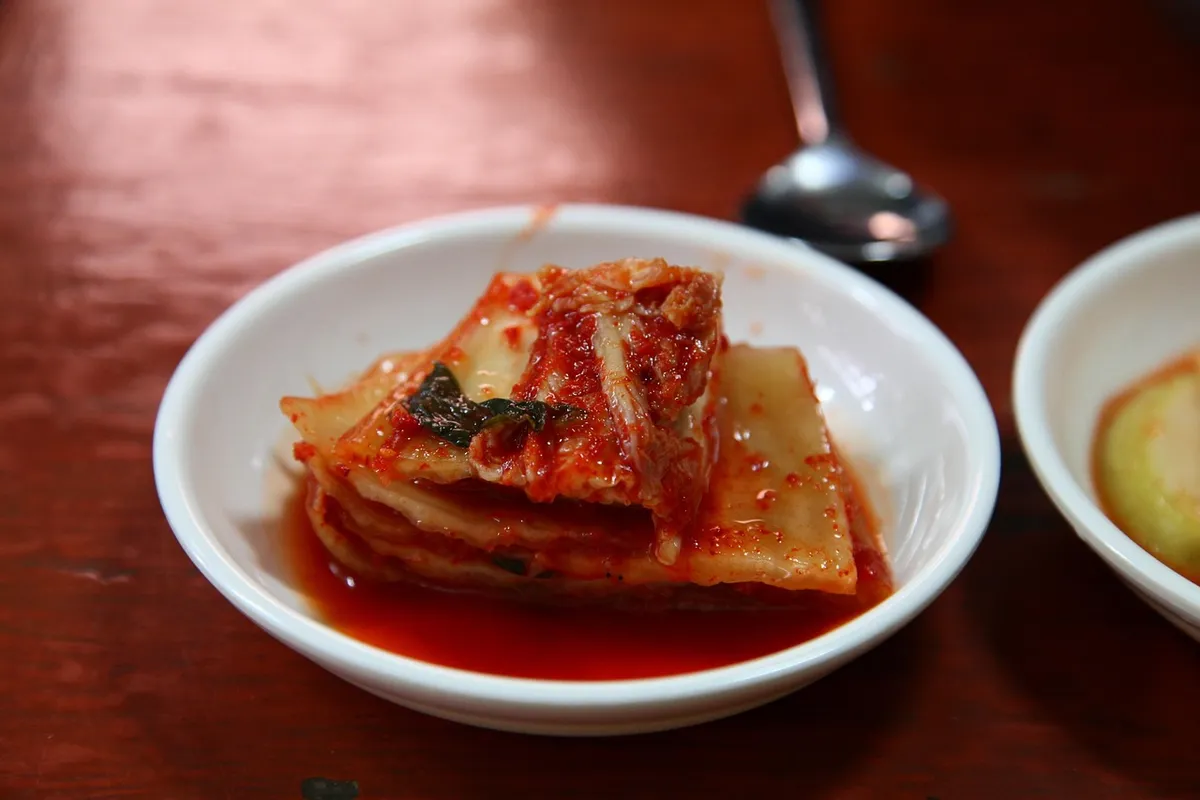
One limitation of comparing historical and modern versions is that specific regional ingredients vary wildly, making a single standard difficult to establish. For example, while some regions might focus on heavy seafood pastes, others prioritize lighter, more acidic profiles.
This variety is part of why the dish remains a versatile staple.
Why are there international naming disputes?
A news reader frowns while looking at a digital screen, noting the conflicting reports about food standards. This tension highlights how food can become a point of international debate.
The history of Korean kimchi has occasionally become a subject of diplomatic and linguistic tension.
This move sought to clarify the cultural identity of the dish in linguistic terms.
Tensions also arose regarding international standards. The same month, BBC News reported that Chinese news organization Global Times claimed a new ISO standard was an international standard for the industry led by China, despite the standard clearly stating it does not apply to kimchi.
These disputes underscore how deeply tied food is to national identity.
The same subject is also called Kimchi tradition explained.
The same subject is also called Korean food evolution.
The same subject is also called Kimchi ingredient guide.
The same subject is also called How to make kimchi.
This part also covers Traditional Korean dishes.
Related




Comments 0